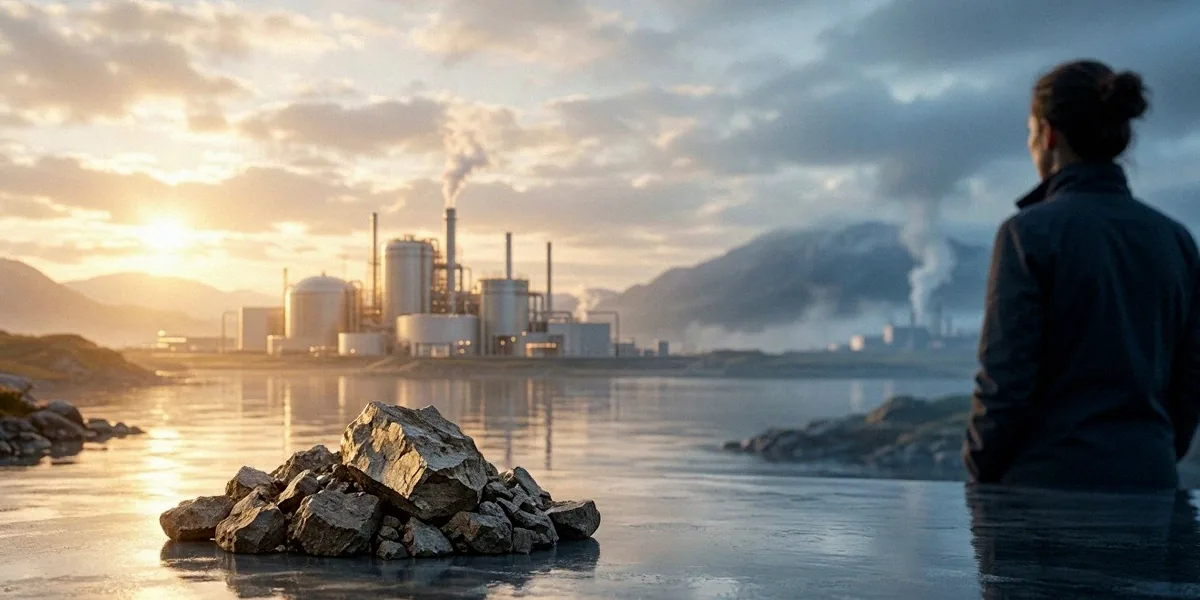
Thorium: Promise and Limits
Thorium is having another moment. Scroll through nuclear energy forums, climate tech newsletters, or YouTube explainers and you’ll find breathless claims that thorium will make uranium obsolete, eliminate meltdown risk, and solve the waste problem in one stroke. We understand the excitement — we’ve felt it ourselves. But at Cogema, we cover uranium mining and nuclear energy in Canada, and that means grounding every conversation in the realities of the Athabasca Basin, the CANDU fleet, and the northern communities whose livelihoods are tied to uranium. So here’s our position: thorium is genuinely promising, and it deserves serious research investment, but it is not a near-term replacement for the industry Canada has already built. This article walks through both sides of that ledger.
Why Thorium Is Having a Moment

Interest in thorium has surged globally over the past decade, driven by a mix of climate urgency, energy security concerns, and frustration with the cost and pace of conventional reactor construction. Countries including India, China, and the United States have active thorium programs, and private ventures have attracted hundreds of millions in investment. The appeal is not new — thorium research dates back to the earliest days of the nuclear age — but the current wave is more serious and better funded than previous ones.
The Allure of Abundance and Safety
Thorium’s core selling points are straightforward. It is roughly three to four times more abundant in the Earth’s crust than uranium, and it is widely distributed, which reduces geopolitical supply risk. When used in a breeder configuration, thorium-232 absorbs neutrons to become uranium-233, a fissile material that can sustain a chain reaction. Proponents also point to passive safety features in liquid-fuel reactor designs, where the fuel itself expands and reduces reactivity as it heats up, and to a waste profile with fewer long-lived transuranic isotopes than a conventional uranium fuel cycle.
- Abundance: Thorium is more common than uranium and found across more jurisdictions.
- Waste profile: Less plutonium and fewer long-lived minor actinides in ideal fuel cycles.
- Passive safety: Liquid-fuel designs can self-stabilize under temperature excursions.
- Proliferation narrative: Often marketed as inherently resistant to weapons diversion, though the reality is more complicated.
Canada’s Early Thorium Experiments
Canada was not a latecomer to this field. Chalk River Laboratories conducted early thorium research in the 1950s and 1960s, exploring thorium-uranium fuel cycles in heavy-water reactors. The work never scaled into a commercial program, largely because Canada’s uranium resources were abundant, cheap, and already feeding a growing CANDU fleet. But the institutional knowledge and experimental data from that era still exist, and they give Canadian researchers a foundation that many countries lack.
Thorium in the Canadian Context: Uranium and Saskatchewan
Any honest discussion of thorium in Canada has to start with the industry we already have. Uranium mining is not a hypothetical here — it is a multi-billion-dollar sector employing thousands of people, generating royalty revenue for the province, and supplying fuel to reactors in Canada and abroad. Thorium, by contrast, has no commercial supply chain in this country. That gap matters when we weigh timelines and priorities.
Athabasca Basin: The Uranium King
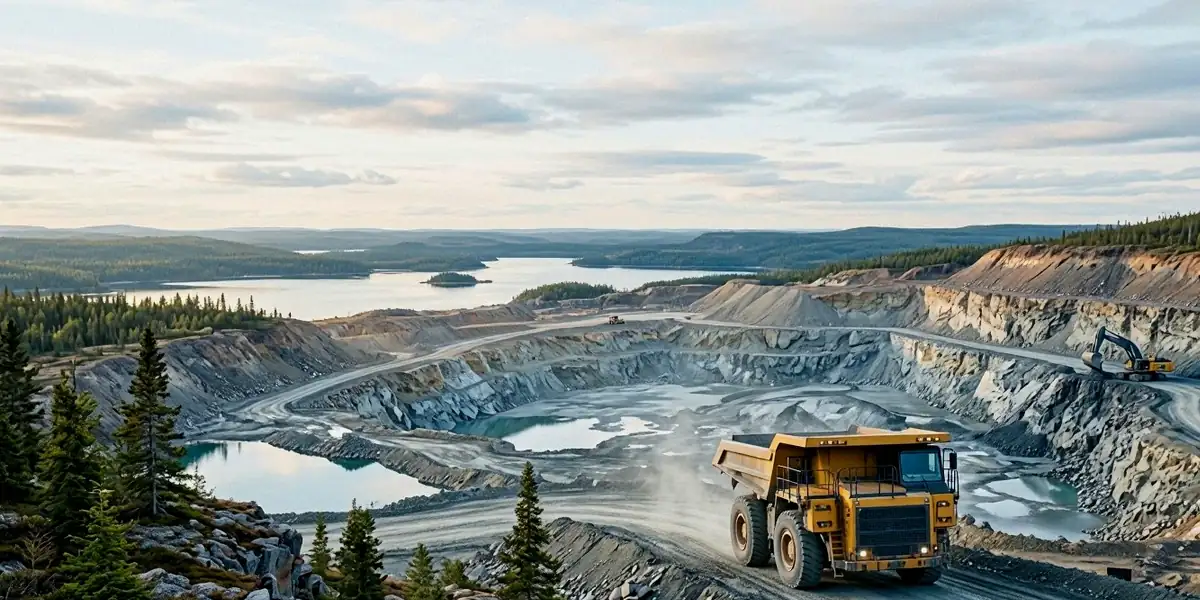
Saskatchewan’s Athabasca Basin supplies about 20% of global uranium production, and it does so at ore grades that are unmatched anywhere else on Earth. Cameco’s Cigar Lake and McArthur River operations, along with Orano’s mines in the region, produce uranium at concentrations that make mines elsewhere look marginal. This is Canada’s strategic advantage in nuclear energy, and it is not something thorium can replace in the near or medium term. The Basin’s output underpins fuel supply agreements, reactor lifetime extensions, and international partnerships that would take decades to replicate around a different fuel.
What Thorium Could Mean for Northern Communities
Northern communities in Saskatchewan, such as those near Cameco’s operations, are key stakeholders in uranium mining. They have negotiated impact benefit agreements, training programs, and employment arrangements built over decades of uranium development. If thorium ever becomes a commercial fuel in Canada, those communities would rightly ask what it means for them: new mining jobs, new environmental reviews, new consultation processes, or a shift in focus away from the uranium deposits they currently depend on. We think those questions should be asked early, not after a supply chain is designed. Thorium mining in Canada would likely begin in different geological settings — monazite sands and rare-earth byproduct streams rather than the unconformity deposits of the Basin — which means different regions could benefit, but also different environmental considerations.
The Technical Hurdles: Reactors and Fuel Cycles
Thorium is not a drop-in replacement for uranium in existing reactors. It is fertile, not fissile, meaning it must be converted into uranium-233 before it can sustain a chain reaction. That conversion requires either a driver fuel, a neutron source, or a reactor design optimized for breeding. This is the single biggest technical reason thorium has not scaled: the fuel cycle and the reactor must be developed together, and that is expensive.
CANDU Compatibility: A Mixed Bag
Canada’s CANDU reactors can, in principle, burn thorium-based fuels, and there has been genuine research into thorium-uranium mixed oxide fuels for heavy-water reactors. The neutron economy of CANDU designs is favorable, and the existing fleet is a potential testbed. But “can” and “should” are different questions. Fuel fabrication for thorium is more difficult than for uranium dioxide — thorium dioxide is harder to sinter, requires remote handling due to gamma-emitting decay products, and has a limited industrial supply chain. Retrofitting a commercial CANDU to run on thorium blends would require licensing amendments, new fuel qualification programs, and years of irradiation testing.
Molten Salt Reactors: The Leading Contender
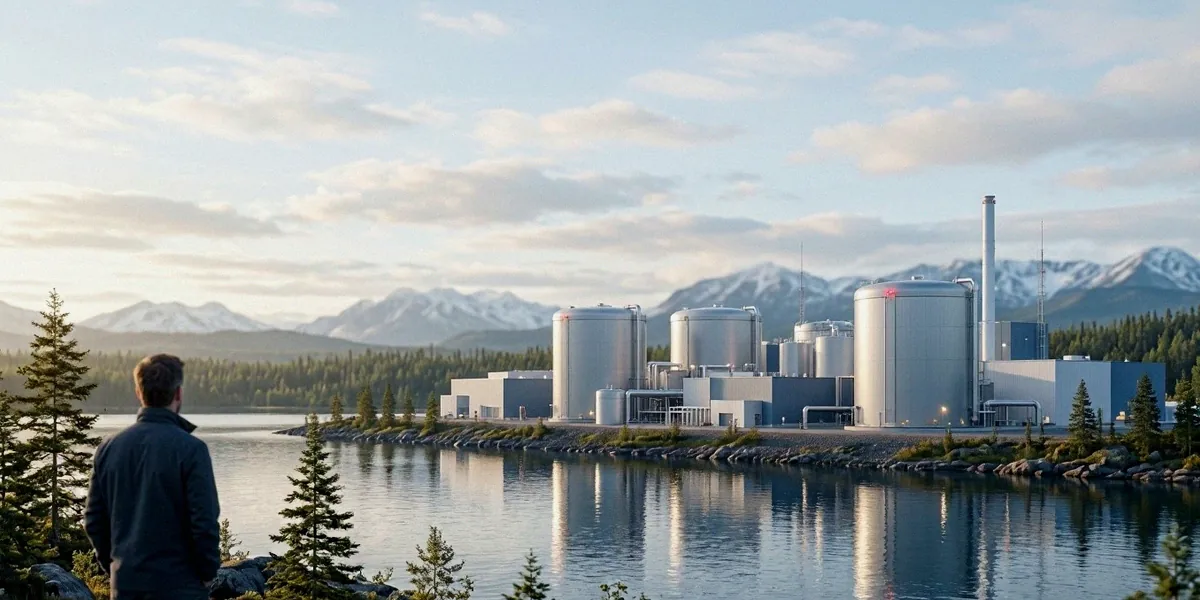
The most credible path for thorium runs through molten salt reactor designs, where fuel is dissolved in a liquid fluoride salt. Terrestrial Energy’s Integral Molten Salt Reactor (IMSR) is a Canadian-led thorium-capable design, and it has progressed through pre-licensing review with the Canadian Nuclear Safety Commission. Flibe Energy in the United States is pursuing a similar liquid-fluoride thorium concept. These designs avoid many of the fuel fabrication problems of solid thorium fuel, but they introduce new engineering challenges: molten salt chemistry, corrosion-resistant materials, online reprocessing, and a regulatory framework that has never licensed a commercial liquid-fuel reactor in Canada.
Economic and Regulatory Realities
Even if the physics and engineering worked perfectly, thorium faces a market problem. Uranium has an established price, a global trading market, conversion and enrichment infrastructure, and fuel fabrication facilities. Thorium has none of that at commercial scale. Building it would require investment across mining, milling, conversion, fuel fabrication, and reactor deployment — a coordinated build-out that no single company or province can justify on its own.
The Chicken-and-Egg Problem
Reactor developers won’t commit to thorium fuel without a supply chain, and fuel suppliers won’t build a supply chain without committed reactor customers. This is the classic chicken-and-egg problem that has stalled thorium for decades. Government-backed demonstration projects are the usual answer, and Canada has some experience with this model through its support for small modular reactor development. But public funding is finite, and every dollar directed at thorium is a dollar not directed at uranium fuel cycle innovation, CANDU refurbishment, or SMR deployment.
Regulatory Pathways at the CNSC
The Canadian Nuclear Safety Commission (CNSC) regulates all nuclear fuel cycles in Canada, and it has shown willingness to engage with novel designs through its vendor pre-licensing program. Terrestrial Energy’s IMSR has gone through this process, which is a meaningful signal. Still, pre-licensing review is not a licence. A full thorium fuel cycle would require new regulations for liquid fuel handling, reprocessing, waste forms, and safeguards — a multi-year undertaking that would consume significant regulatory capacity.
Environmental and Proliferation Considerations
Thorium’s environmental and security credentials are often overstated by advocates. The fuel cycle is cleaner than uranium in some respects and comparable in others. We think it’s worth being precise about both.
Waste: Less Long-Lived, But Not Trivial
A well-designed thorium fuel cycle produces less plutonium and fewer long-lived minor actinides than a once-through uranium cycle. That is a real advantage. But thorium waste still contains fission products that require isolation for centuries, and uranium-233 decay chains produce gamma-emitting isotopes that complicate handling. If thorium is used in a breeder configuration with reprocessing, the waste streams include intermediate-level materials that need the same geological disposal considerations as uranium waste. Thorium reduces some problems; it does not eliminate them.
Proliferation: A Nuanced Picture
Thorium is not proliferation-proof. Uranium-233, the fissile material bred from thorium, is a weapons-usable isotope, and its decay chain includes uranium-232, which emits hard gamma radiation that makes handling dangerous — but that is a handling hazard, not a safeguards guarantee. The IAEA has assessed thorium fuel cycles and concluded that they present proliferation risks comparable to uranium cycles in several configurations, particularly where reprocessing is involved. Canada, as a signatory to the Nuclear Non-Proliferation Treaty and a participant in IAEA safeguards, would need to design any thorium program with the same rigor applied to uranium.
The Path Forward for Canada
So where does that leave us? We think Canada should pursue thorium research seriously, but without pretending it is a near-term answer to anything. The realistic path involves targeted funding, pilot projects, and international collaboration, with uranium remaining the backbone of Canada’s nuclear sector for decades to come.
Research and Pilot Projects
Canada should fund thorium fuel cycle research at Chalk River and at Canadian universities, support irradiation testing in existing research reactors, and encourage demonstration projects for molten salt designs. Collaboration with India, which has the world’s most advanced thorium program, and with China, which is building molten salt test reactors, would accelerate learning. Federal and provincial governments should also fund studies on what thorium mining would mean for northern communities and for environmental review processes.
Uranium First, Thorium Later?
We believe the sequencing matters. Saskatchewan’s uranium industry is a proven asset that funds provincial budgets, employs northern residents, and supplies global markets. Canada’s CANDU fleet is being refurbished and will operate for decades. Small modular reactor deployment is underway. Thorium can be developed in parallel as a long-term option, but it should not be positioned as a competitor for the same investment dollars or the same political attention. Uranium first, thorium later — with sustained research in the meantime — is the pragmatic position.
FAQ
Is thorium a realistic replacement for uranium in Canada?
Not in the near or medium term. Canada has a fully developed uranium industry anchored in Saskatchewan’s Athabasca Basin, which supplies about 20% of global uranium production, plus a CANDU fleet designed around uranium fuel. Thorium has no commercial supply chain, no licensed commercial reactor design in Canada, and no fuel fabrication infrastructure. It is a long-term option, not a replacement.
Did Canada ever research thorium reactors?
Yes. Chalk River Laboratories conducted early thorium research in the 1950s and 1960s, exploring thorium-uranium fuel cycles in heavy-water reactors. The program was discontinued as Canada focused on its abundant uranium resources, but the experimental data and institutional knowledge remain relevant today.
What is the CNSC’s role in thorium development?
The Canadian Nuclear Safety Commission regulates all nuclear fuel cycles in Canada, including any future thorium program. It has engaged with novel reactor designs through its vendor pre-licensing program, including Terrestrial Energy’s IMSR, but a full thorium fuel cycle would require new regulations covering liquid fuel handling, reprocessing, waste forms, and safeguards.
Is thorium safer than uranium?
It depends on the reactor design. Liquid-fuel molten salt reactors can have passive safety advantages, and thorium fuel cycles produce less plutonium and fewer long-lived minor actinides. However, thorium waste still requires long-term isolation, and uranium-233 bred from thorium is weapons-usable. The safety and security picture is more nuanced than advocates often suggest.
What should Canada do about thorium next?
Our team believes Canada should fund research at Chalk River and Canadian universities, support irradiation testing and molten salt demonstration projects, and collaborate with India and China, which have advanced thorium programs. At the same time, uranium should remain the priority for investment and policy attention, given its proven economic and strategic value to Saskatchewan and northern communities.
Thorium holds genuine long-term promise: it is abundant, it can reduce some waste burdens, and it pairs well with advanced reactor designs like Terrestrial Energy’s IMSR. But it requires sustained research and development, new infrastructure, and a regulatory framework that does not yet exist in Canada. Our team believes the right approach is to keep leveraging Canada’s uranium advantage — especially in the Athabasca Basin, where northern communities are key partners — while keeping a pragmatic, well-funded eye on thorium for the decades ahead.


Post Comment