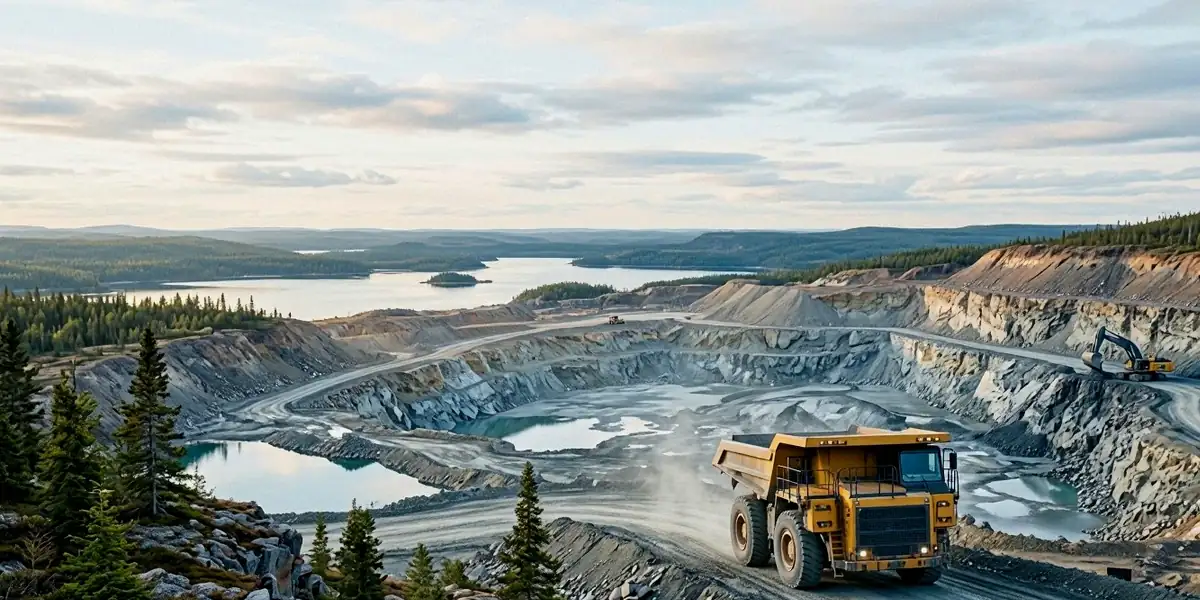
Uranium Mining in Saskatchewan: An Overview
Saskatchewan produces roughly 20% of the world’s uranium, yet the province holds only a tiny fraction of the global population. That single statistic tells you almost everything about why this prairie province punches so far above its weight in the nuclear fuel cycle — and why what happens in northern Saskatchewan matters to Canada’s entire nuclear future. Here at cogema.ca, we follow this sector closely, and in this overview we break down how Saskatchewan became a uranium powerhouse, how the mining actually works, and what it means for the northern communities that live alongside these operations.
Why Saskatchewan Leads the World in Uranium
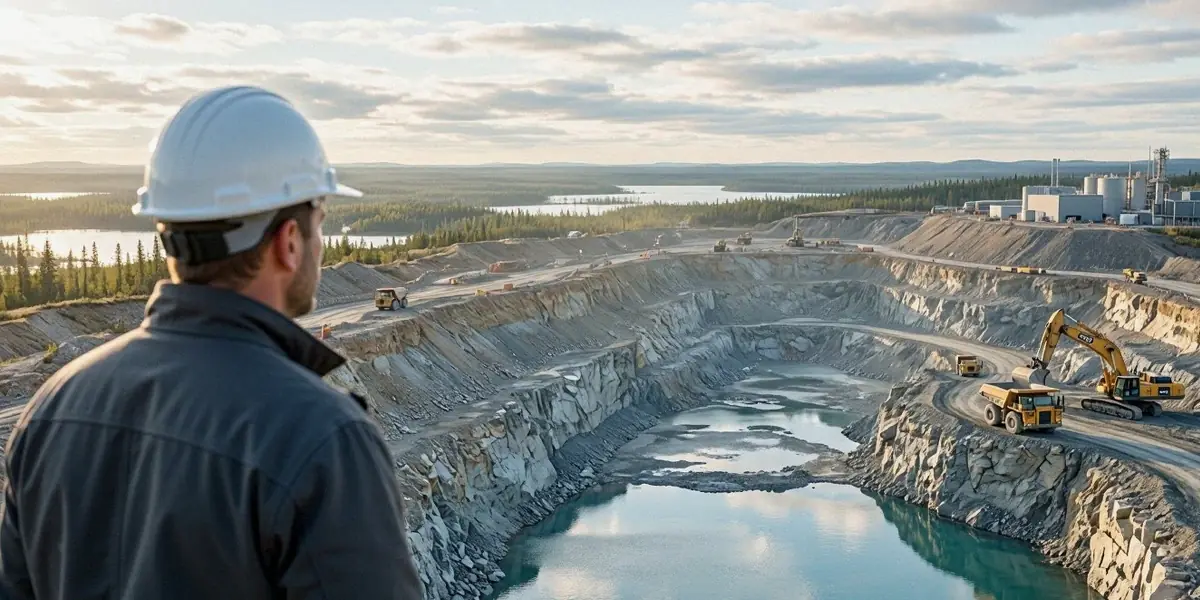
Saskatchewan has ranked among the top two uranium-producing jurisdictions on Earth for decades, trading the number one spot with Kazakhstan depending on the year. What sets the province apart isn’t the volume of ore pulled from the ground — it’s the grade. Saskatchewan’s uranium deposits are, on average, many times richer than those found almost anywhere else, which means miners here move far less rock to produce the same amount of nuclear fuel.
Two companies dominate the landscape: Cameco, headquartered in Saskatoon, and Orano, the French nuclear giant that operates through its Canadian subsidiary. Together, they run the major mines and mills in the province, employing thousands of people directly and indirectly.
The Athabasca Basin: Earth’s Richest Uranium Deposit
The Athabasca Basin, a vast region spanning northern Saskatchewan and a sliver of Alberta, holds the highest-grade uranium deposits globally. Some ore bodies here grade above 10% uranium — and in exceptional cases, much higher — compared to the global average of well under 1%. This concentration is the reason Saskatchewan’s mines remain economically competitive even when uranium prices swing. Deposits like Cigar Lake and McArthur River, both operated by Cameco with Orano as a partner, are among the most valuable uranium assets in the world.
How Saskatchewan Compares to Other Global Producers
Kazakhstan leads the world in total uranium output, but it does so with lower-grade, often in-situ leach operations. Australia holds enormous reserves but has seen production constrained by regulatory and political hurdles. Namibia and Niger round out the top tier. Saskatchewan’s edge is quality over sheer quantity — a smaller number of exceptionally rich mines that deliver outsized value per tonne of ore. For Canada, that translates into energy security, export revenue, and a strategic role in global nuclear supply chains.
The Science and Process of Uranium Mining
Mining uranium in northern Saskatchewan is not like mining gold or copper. Because the ore is so rich, conventional methods had to be re-engineered to protect workers from radiation exposure. That’s where specialized techniques like jet boring and raise boring come in. Jet boring uses high-pressure water to cut frozen ore from the deposit, while raise boring drills vertical shafts to access ore bodies safely. In both cases, remote-controlled equipment does much of the dangerous work, keeping people out of high-grade zones.
Overseeing all of this is the Canadian Nuclear Safety Commission (CNSC), the federal regulator that licenses every stage of a uranium operation — from exploration and construction to operation, decommissioning, and long-term waste management. Provincial bodies, including Saskatchewan’s Ministry of Environment, add another layer of oversight.
Open-Pit vs. Underground Mining in Northern Saskatchewan
Both methods are used in the province, depending on the depth and shape of the deposit:
- Open-pit mining works when ore lies close to the surface. The now-closed Cluff Lake mine and the Rabbit Lake operation used this approach in their early years.
- Underground mining is required for deeper, higher-grade deposits like McArthur River and Cigar Lake, where jet boring and raise boring are the tools of choice.
Underground methods dominate today because most of Saskatchewan’s remaining high-grade ore sits hundreds of metres below the surface.
Milling and Processing: From Ore to Yellowcake
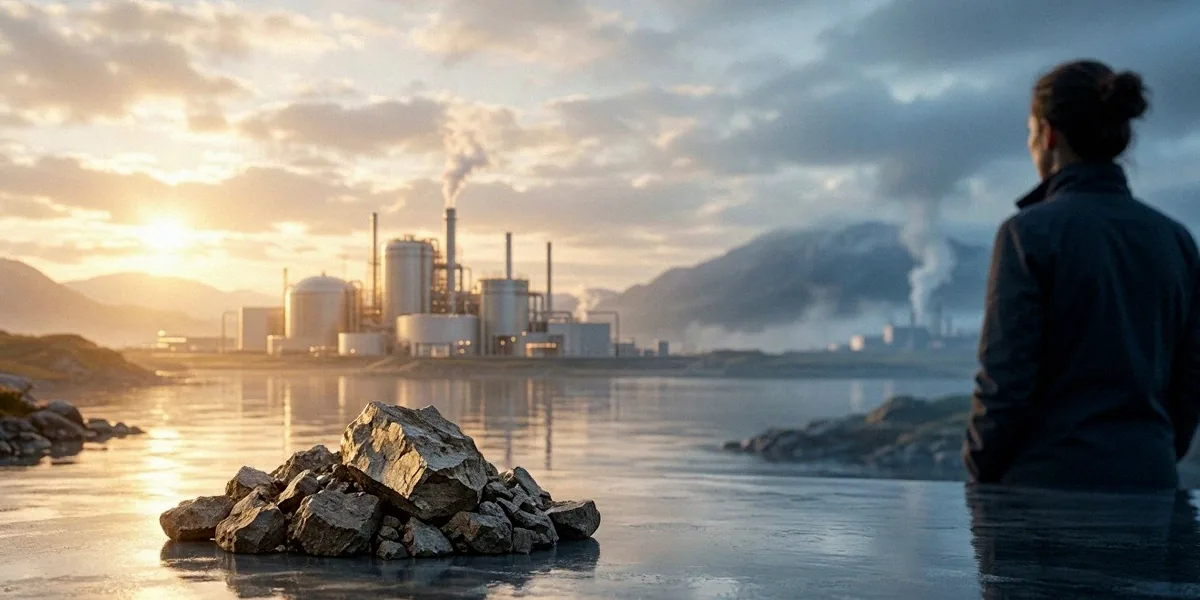
Once ore reaches the surface, it travels to a mill — such as the McClean Lake mill, operated by Orano — where it’s crushed, ground, and chemically treated to extract uranium. The end product is uranium concentrate, commonly called yellowcake, a powder that’s shipped to conversion and enrichment facilities before eventually becoming nuclear fuel. Saskatchewan’s mills are among the most efficient in the world, partly because the high-grade feed means less material has to be processed per unit of output.
Economic and Social Impact on Northern Communities
Uranium mining is the economic backbone of many northern Saskatchewan communities. The industry directly employs thousands of people, a large share of them Indigenous, and generates hundreds of millions of dollars in procurement spending with local and Indigenous-owned businesses each year. For a region with limited alternative employment, these are not abstract numbers — they’re paycheques, training programs, and infrastructure.
Indigenous Partnerships and Land Rights
Indigenous communities in northern Saskatchewan have partnership agreements with mining companies that go well beyond consultation. These agreements typically include revenue sharing, environmental monitoring roles, and commitments around land use. The Prince Albert Grand Council, which represents a dozen First Nations in the region, has been a key partner in negotiations affecting uranium operations. These relationships aren’t always friction-free, but they’ve become a model for how resource development can proceed with Indigenous consent and participation.
Jobs, Training, and Local Business Opportunities
Mining companies in the Athabasca Basin run extensive training programs to prepare northern residents for careers in the industry — everything from heavy equipment operation to geology and environmental monitoring. Local businesses, many of them Indigenous-owned, provide catering, camp services, transportation, and construction support. The result is a circular economy where uranium revenue stays closer to the communities that host the mines.
Environmental Stewardship and Regulation
Uranium mining carries real environmental risks, and the regulatory framework in Saskatchewan is designed to manage them. Every new project undergoes a federal environmental assessment, and ongoing operations are subject to continuous monitoring by the CNSC and provincial authorities. Water quality, air quality, and radiation levels are tracked year-round, with results made public.
Managing Tailings and Water Quality
Tailings — the leftover material after uranium is extracted — are one of the biggest long-term concerns. At the McClean Lake operation, tailings are managed using a method called the JEB Tailings Management Facility, where waste is placed in a mined-out pit and covered with a engineered barrier. Water treatment plants at each site remove contaminants before any water is released, and monitoring wells track groundwater conditions for decades.
Reclamation and Mine Closure Practices
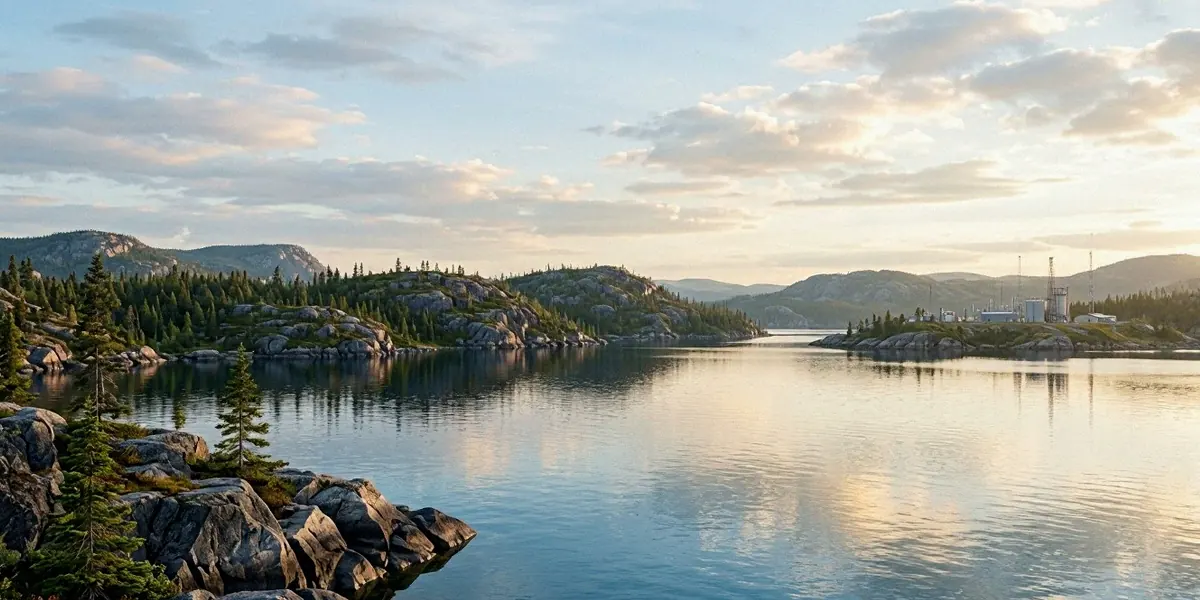
When a mine reaches the end of its life, companies are required to reclaim the land — reshaping it, replanting vegetation, and ensuring that any remaining waste is stable over the long term. The decommissioned Cluff Lake mine is often cited as a case study in successful reclamation, with the site now returned to a state that supports traditional land use. Financial guarantees are required up front so that taxpayers aren’t left covering cleanup costs if a company walks away.
The Future of Uranium Mining in Saskatchewan
Global demand for uranium is rising again, driven by climate goals, energy security concerns, and a wave of new reactor construction in Asia and Europe. Saskatchewan is positioned to benefit — but the shape of that benefit may look different than in past cycles.
Small Modular Reactors and Domestic Demand
Small modular reactors (SMRs) are a big part of the conversation in Canada right now. Saskatchewan has been exploring SMR deployment as a way to decarbonize its electricity grid, and Ontario has already committed to building them. If SMRs take off domestically, they’d create a new domestic market for Saskatchewan uranium — a shift from the province’s traditional reliance on exports.
Exploration Hotspots and Investment Outlook
Exploration activity in the Athabasca Basin remains strong. Companies like NexGen Energy are advancing new high-grade projects, including the Rook I deposit, which could become one of the largest uranium mines in the world if approved and built. Investors are watching closely, and the province continues to attract exploration dollars from around the globe.
FAQ
How much of the world’s uranium does Saskatchewan produce?
Saskatchewan produces about 20% of the world’s uranium, making it one of the top two producing jurisdictions globally alongside Kazakhstan.
Which companies mine uranium in Saskatchewan?
Cameco and Orano are the two major mining companies operating in Saskatchewan, with operations concentrated in the Athabasca Basin.
Who regulates uranium mining in Canada?
The Canadian Nuclear Safety Commission (CNSC) is the federal regulator responsible for licensing and overseeing uranium mining, supported by provincial bodies like Saskatchewan’s Ministry of Environment.
Do Indigenous communities benefit from uranium mining?
Yes. Indigenous communities in northern Saskatchewan have partnership agreements with mining companies that include revenue sharing, employment, training, and business opportunities, with groups like the Prince Albert Grand Council playing a key role.
What is yellowcake?
Yellowcake is uranium concentrate, a powdered form of uranium produced at milling facilities like McClean Lake. It’s shipped to conversion and enrichment plants before being fabricated into nuclear fuel.
Saskatchewan’s uranium sector sits at the intersection of economic opportunity and environmental responsibility. The province’s high-grade deposits, its partnership model with northern Indigenous communities, and its rigorous regulatory framework have made it a global leader — and as the world looks to nuclear energy to meet climate targets, Saskatchewan’s role in Canada’s nuclear future is only growing. We’ll keep tracking the story here at cogema.ca.

Post Comment