From Ore to Fuel: The Nuclear Fuel Cycle
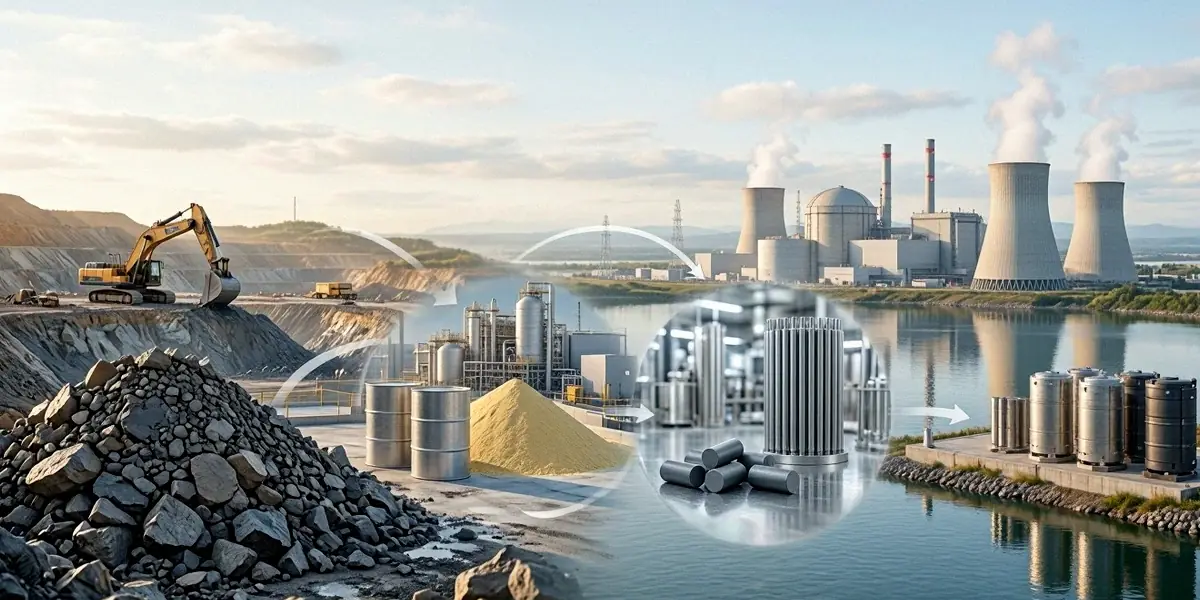
Have you ever wondered what actually happens to uranium after it’s pulled from the ground in northern Saskatchewan? It’s a fair question, and most Canadians never get a straight answer. The truth is that the journey from a rocky orebody to a working reactor is one of the most fascinating industrial supply chains in the country — and almost every step of it happens right here in Canada. In this post, we walk through the full nuclear fuel cycle, from the mines of the Athabasca Basin to the CANDU reactors on the shores of Lake Ontario, and explain where each stage fits together.
Uranium Mining in Saskatchewan: Where the Fuel Cycle Begins
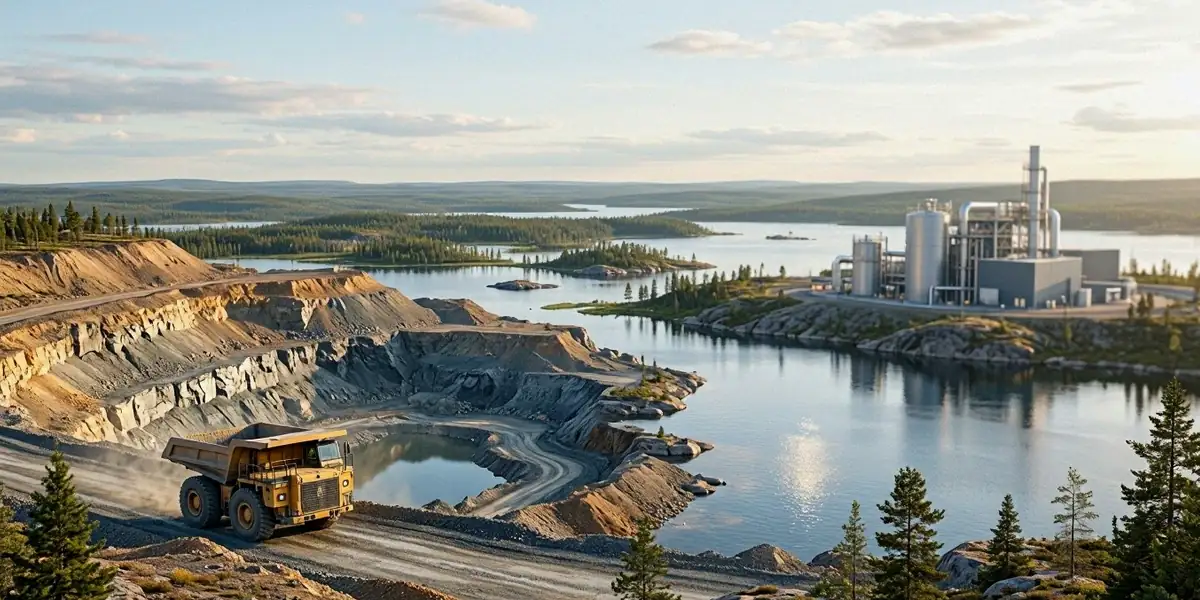
Saskatchewan is the second-largest uranium producer in the world, and that’s not a small claim. The province has been mining uranium for decades, and its output remains central to global supply. When people ask us where Canada’s nuclear story really starts, we point north — to the Canadian Shield, where some of the richest uranium deposits on Earth sit just below the surface.
The Athabasca Basin: Canada’s Uranium Heartland
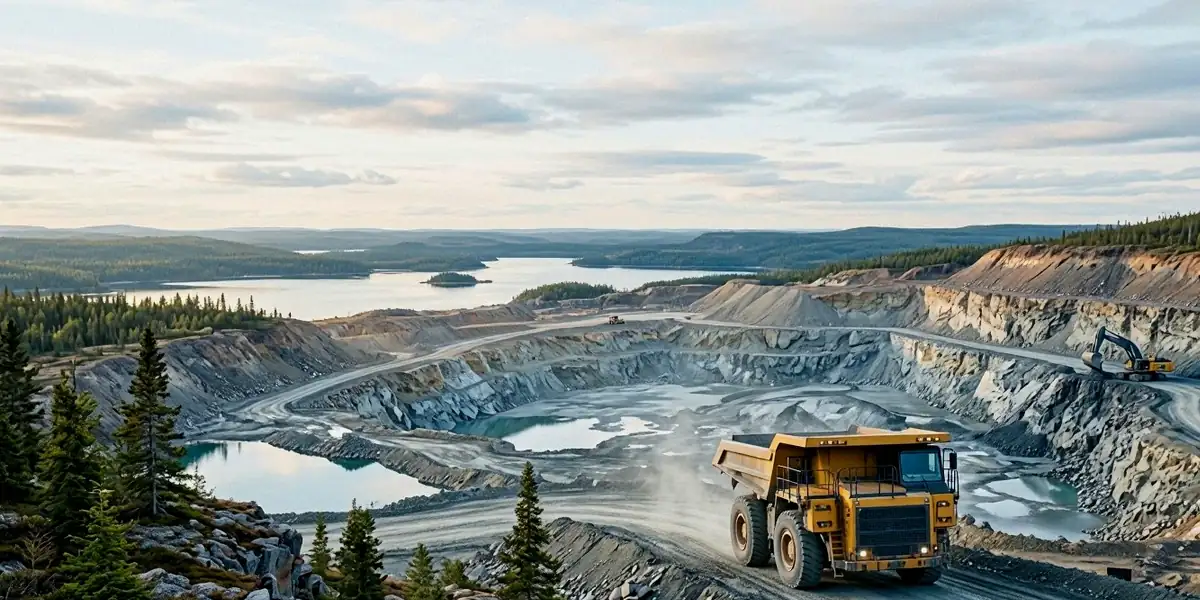
The Athabasca Basin, straddling northern Saskatchewan and a sliver of Alberta, is the highest-grade uranium district in the world. Deposits here can be ten to a hundred times richer than the global average, which changes the economics of mining entirely. Major producers like Cameco and Orano operate mines in this region, including Cigar Lake and McArthur River, and the ore they extract feeds a supply chain that reaches reactors on multiple continents. Saskatchewan’s Athabasca Basin supplies about 20% of global uranium production — a figure that underlines just how much the world relies on this corner of Canada.
High-Grade Ore and Its Global Significance
High-grade ore matters for more than just profit margins. Because the uranium content is so concentrated, mines can extract more energy per tonne of rock, which reduces the volume of material that needs to be moved and processed. That efficiency has environmental benefits too — less waste rock, less energy consumed per unit of uranium, and a smaller surface footprint than you’d see at lower-grade operations elsewhere. From a global perspective, Saskatchewan uranium helps fuel reactors in the United States, Europe, and Asia, making the province a quiet but essential player in international energy security.
Milling and Refining: Turning Rock into Uranium Concentrate
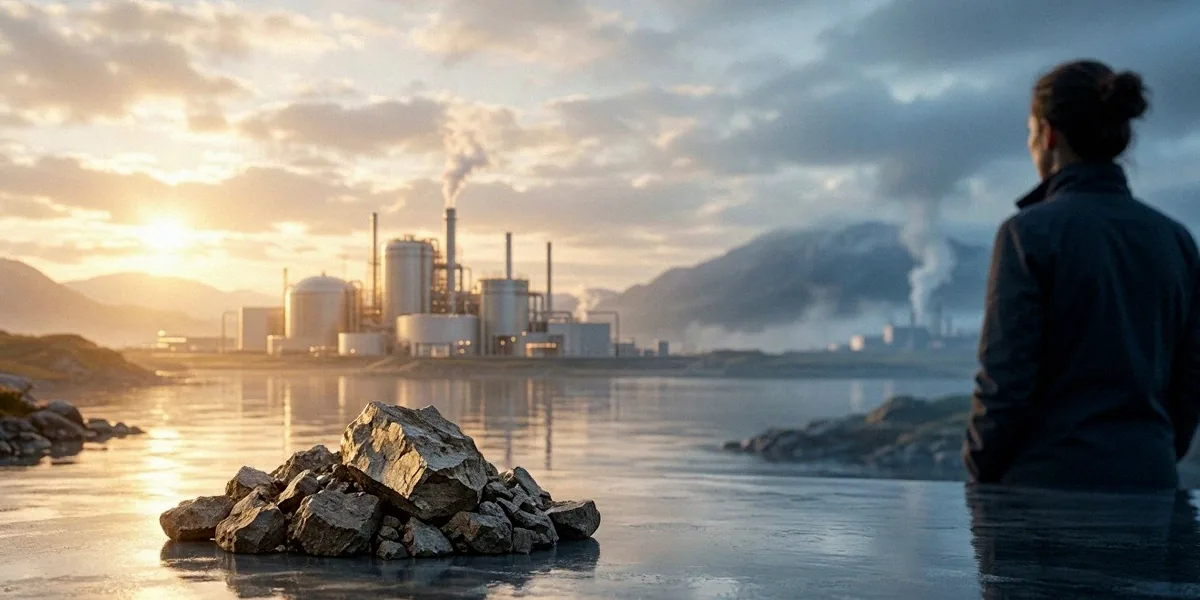
Once ore leaves the mine, it doesn’t go straight to a reactor. It heads to a mill, where the uranium is chemically separated from the surrounding rock. This is where the raw material starts to look like something useful.
The Milling Process: From Ore to Yellowcake
Milling is essentially a chemical extraction process. Ore is crushed, ground, and treated with acids or alkaline solutions to dissolve the uranium. The resulting solution is then purified and concentrated into a powder known as uranium concentrate, or “yellowcake.” In northern Saskatchewan, two facilities handle most of this work: Cameco’s Key Lake and Orano’s McClean Lake. These mills are among the largest and most advanced in the world, and they’re designed to handle the exceptionally high-grade ore from the Athabasca Basin. The yellowcake they produce is then sealed in drums and shipped to conversion facilities, mostly in Ontario and abroad.
Northern Employment and Community Partnerships
One thing we think doesn’t get enough attention is the role northern communities play in this industry. Many of the workers at Key Lake, McClean Lake, and the surrounding mines are residents of nearby northern Saskatchewan communities, including Indigenous communities that have signed impact benefit agreements with operators. These partnerships have created stable, well-paying jobs in regions where economic opportunities are often limited. They’ve also brought training programs, local business contracts, and long-term revenue-sharing arrangements. The result is a mining sector that, while not without controversy, has become a significant economic pillar for northern Saskatchewan.
Conversion and Enrichment: Preparing Uranium for CANDU Reactors
Yellowcake isn’t reactor fuel yet. It needs to be converted into a chemical form that can be fabricated into fuel, and in Canada’s case, that path looks different from most other countries.
Why CANDU Reactors Use Natural Uranium
CANDU reactors — Canada’s homegrown design — are unique because they run on natural uranium dioxide rather than enriched uranium. That’s a major advantage. It means Canada doesn’t need large-scale enrichment facilities, which are expensive, technically complex, and politically sensitive. Instead, the fuel cycle stays simpler: yellowcake is converted directly into uranium dioxide powder, which is then fabricated into fuel. The CANDU design uses heavy water as both moderator and coolant, which allows it to sustain a chain reaction with unenriched fuel.
Conversion Steps and Canadian Facilities
Conversion typically involves turning uranium concentrate into uranium trioxide, then into uranium dioxide. Some of this work happens at facilities in Ontario, including Cameco’s conversion plant in Port Hope. From there, the uranium dioxide powder moves to fuel fabrication. The whole process is tightly regulated by the Canadian Nuclear Safety Commission, and every step is tracked to ensure material accountability and worker safety.
Fuel Fabrication: Assembling the Bundles That Power Ontario
This is where uranium dioxide powder becomes an actual fuel bundle — the physical object that gets loaded into a reactor.
From Pellet to Bundle: Precision Manufacturing
The powder is pressed into small cylindrical pellets, which are then sintered at high temperatures to make them hard and dense. These pellets are stacked inside zirconium alloy tubes, which are sealed to form fuel elements. A group of elements is then assembled into a fuel bundle — the characteristic cylindrical bundle used in CANDU reactors. Cameco Fuel Manufacturing in Port Hope, Ontario, produces fuel bundles for CANDU reactors, and the precision required at this stage is remarkable. Every pellet, every tube, and every bundle has to meet exacting tolerances.
Quality Control and Safety Standards
Fuel fabrication isn’t just about making a product — it’s about making a product that will perform safely inside a reactor for years. Quality control includes dimensional checks, material testing, and rigorous documentation. A typical CANDU bundle contains about 19 to 37 elements, depending on the design, and each one must be free of defects that could affect performance. We think it’s worth appreciating how much engineering goes into something that looks, at a glance, like a simple metal cylinder.
Reactor Operation and Used Fuel: The Canadian Nuclear Energy Story
Once fuel bundles are delivered to a reactor site, they’re loaded into the core, and the real work begins: generating electricity for millions of Canadians.
CANDU Reactors: A Canadian Success Story
Ontario’s CANDU fleet — at Bruce, Darlington, and Pickering — is the backbone of the province’s low-carbon electricity supply. These reactors have been operating for decades, and refurbishments at Bruce and Darlington are extending their lives by another 30-plus years. CANDU reactors are known for their reliability, their ability to use natural uranium, and their capacity to be refuelled while running. For anyone tracking Canada’s energy mix, they’re a central part of the story.
Managing Used Fuel: Responsibility and Innovation
After fuel has been in a reactor for a few years, it becomes “used fuel.” It’s still highly radioactive, so it’s stored safely — first in pools, then in dry storage casks at reactor sites. The long-term plan for Canada’s used fuel is managed by the Nuclear Waste Management Organization (NWMO), which is responsible for Canada’s used fuel strategy. The NWMO’s plan involves deep geological repository siting, with an emphasis on informed consent from host communities. It’s a multi-decade project, and it reflects a serious commitment to managing the back end of the fuel cycle responsibly.
- Saskatchewan’s Athabasca Basin supplies about 20% of global uranium production.
- Cameco’s Key Lake and Orano’s McClean Lake are major milling sites in northern Saskatchewan.
- CANDU reactors, designed in Canada, use natural uranium dioxide fuel.
- Cameco Fuel Manufacturing in Port Hope, Ontario, produces fuel bundles for CANDU reactors.
- The Nuclear Waste Management Organization (NWMO) is responsible for Canada’s used fuel strategy.
What ties all of this together is Canadian expertise. From the mines of northern Saskatchewan to the mills, conversion plants, fabrication facilities, and reactors of Ontario, the nuclear fuel cycle is a chain of skills, partnerships, and infrastructure that few countries can match end to end. We think that’s worth understanding — not just as a technical curiosity, but as a real factor in how Canada produces electricity and meets its climate goals. Whether you support nuclear energy or have concerns about it, an informed debate depends on knowing how the fuel cycle actually works.
FAQ
Where does Canada’s uranium come from?
Most of Canada’s uranium comes from northern Saskatchewan, specifically the Athabasca Basin. This region hosts some of the highest-grade uranium deposits in the world and supplies about 20% of global uranium production.
Why don’t CANDU reactors need enriched uranium?
CANDU reactors use heavy water as a moderator, which allows them to sustain a nuclear chain reaction using natural uranium dioxide. This avoids the need for enrichment, which simplifies Canada’s fuel cycle compared to many other countries.
Where are CANDU fuel bundles made?
Cameco Fuel Manufacturing in Port Hope, Ontario, produces fuel bundles for CANDU reactors. The facility turns uranium dioxide powder into pellets, elements, and finished bundles.
What happens to used nuclear fuel in Canada?
Used fuel is first stored at reactor sites in pools and then in dry storage casks. The Nuclear Waste Management Organization (NWMO) is responsible for Canada’s long-term used fuel strategy, which involves selecting a site for a deep geological repository with host community consent.
How do northern communities benefit from uranium mining?
Many northern Saskatchewan communities benefit through direct employment, training programs, local business contracts, and impact benefit agreements with mining companies. These partnerships have become an important source of economic development in the region.

Post Comment