The Athabasca Basin Explained: The World’s Richest Uranium Region
How does a remote stretch of northern Saskatchewan, accessible mainly by ice road and charter flight, end up supplying roughly 20% of the world’s uranium? It’s a fair question, and the answer comes down to geology, patience, and partnerships. In this post, we break down what the Athabasca Basin actually is, how its deposits formed, which mines are operating today, and why northern communities are central to the whole story. No hype — just a clear look at one of Canada’s most important resource regions.
Where Is the Athabasca Basin and Why Does It Matter?
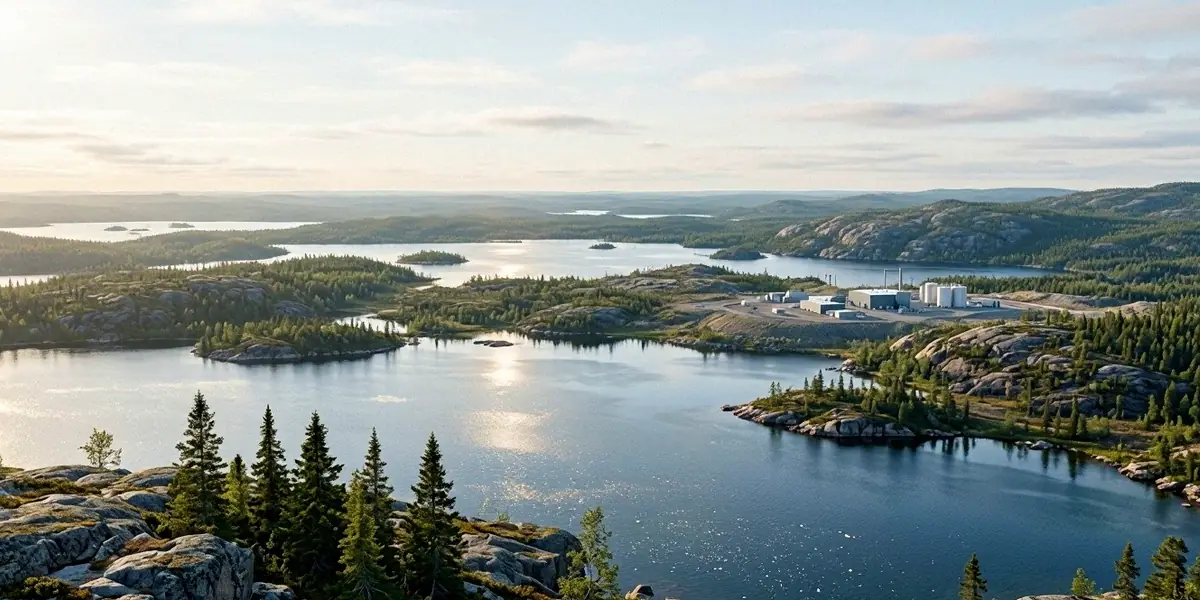
The Athabasca Basin sits in northern Saskatchewan, stretching across roughly 100,000 square kilometres of boreal forest, lakes, and muskeg. It’s not a single mine site or a small claim block — it’s a massive geological formation that happens to host some of the richest uranium deposits ever discovered. For context, that’s an area larger than New Brunswick. And despite its size, the region remains sparsely populated, with mining operations connected to the rest of Canada through a mix of highways, winter roads, and air transport.
Geography and Size of the Basin
The basin extends from near the community of Wollaston Lake in the east toward the Alberta border in the west, with the town of Uranium City — a legacy mining centre — sitting near its northwestern edge. The nearest major service hub is Saskatoon, where Cameco, one of the world’s largest uranium producers, is headquartered. That distance matters: it shapes how mines are supplied, how workers are rotated in and out, and how environmental monitoring is carried out across a landscape with few permanent roads.
Global Importance of Athabasca Uranium
Here’s the number that surprises most people: the Athabasca Basin accounts for about 20% of global uranium production. For a region this remote and this small in population terms, that’s an extraordinary share of the world’s nuclear fuel supply. The basin’s flagship deposits — Cigar Lake and McArthur River — are among the highest-grade uranium mines on the planet, and their output feeds reactors in Canada and abroad. When people talk about Saskatchewan as a global uranium powerhouse, this is the region they mean.
How Uranium Formed in the Athabasca Basin
The deposits here didn’t form overnight. They took shape over 1.5 billion years ago, through a sequence of geological events that concentrated uranium into ore bodies far richer than almost anywhere else on Earth. Understanding that process helps explain why this region is so exceptional — and why it can’t simply be replicated elsewhere.
Unconformity-Type Deposits
The Athabasca Basin is famous for what geologists call unconformity-type deposits. An unconformity is a boundary between two rock types of very different ages — in this case, ancient basement rocks below and younger sandstone above. Uranium-rich fluids moved along that boundary, reacting with graphite-bearing rocks and depositing uranium where conditions were right. The result is ore bodies sitting right at or near the unconformity, often at depths of several hundred metres.
Why Grades Are So High
Global uranium mines typically average well under 1% U3O8. Athabasca deposits range from about 2% to 20% U3O8 — in some cases, dramatically higher. That concentration means less rock has to be mined and milled for the same amount of uranium, which has real implications for both economics and environmental footprint. It’s also why these deposits are so valuable and why exploration in the basin continues decades after the first major discoveries.
Major Mines and Operations in the Athabasca Basin
A handful of operations anchor the basin’s production. Each has its own story, its own mining method, and its own history of expansion, suspension, and restart. Here’s a rundown of the key players.
Cigar Lake Mine
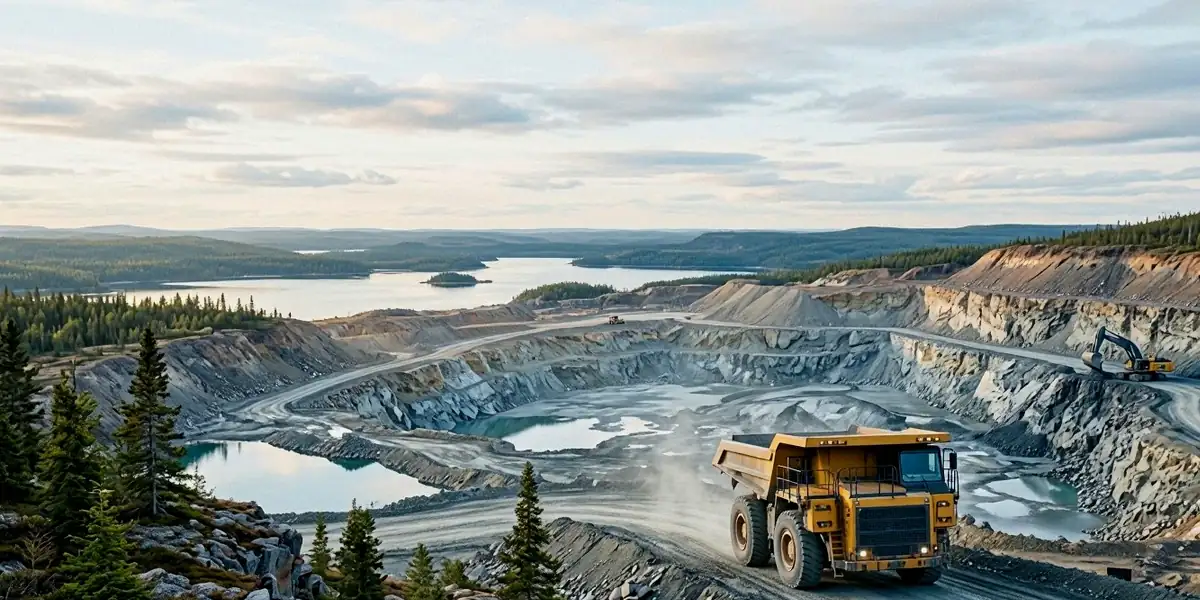
Cigar Lake is a joint venture operated by Cameco, with Orano as a major partner. It’s one of the highest-grade uranium mines in the world, and it uses a method called jet boring — essentially high-pressure water jets that cut through the ore while the ground is frozen to keep conditions stable. This approach was developed specifically because the deposit is high-grade and sits in challenging ground conditions. Cigar Lake has become a cornerstone of Canada’s uranium output.
McArthur River Mine
McArthur River, also operated by Cameco, has historically been the world’s largest high-grade uranium mine. It was placed on care and maintenance in 2018 and later restarted as market conditions improved. Like Cigar Lake, it relies on specialized methods — including raiseboring and freeze walls — to safely extract ore that would be dangerous to mine conventionally. Its suspension and restart are a useful reminder that uranium mining is cyclical and tied closely to global supply and demand.
Other Notable Projects
Beyond the two giants, the basin hosts a range of other operations and projects:
- Rabbit Lake, one of the basin’s older mining and milling sites, has produced uranium for decades and continues to play a role in processing and reclamation.
- Exploration projects across the basin continue to test new targets along the unconformity, with junior companies and major producers alike active in the region.
- Milling infrastructure, including the McClean Lake mill, supports processing of ore from multiple deposits.
Cameco, headquartered in Saskatoon, remains the dominant Canadian company in the basin, though international partners like Orano hold significant stakes in several operations.
The Role of Northern Communities and Indigenous Partnerships
Mining in the Athabasca Basin doesn’t happen in isolation. The region overlaps with the traditional territories of several Indigenous nations, and the industry’s social licence depends on meaningful partnerships with those communities. This isn’t a side note — it’s central to how mining operates in northern Saskatchewan today.
Indigenous Engagement and Agreements
Indigenous-owned companies provide a wide range of services to mining operations, from construction and hauling to environmental monitoring and camp services. Revenue-sharing agreements, collaboration agreements, and impact benefit agreements are now standard practice for major projects. The Ya’thi Néné Lands and Resources Office, which represents several northern communities, is one example of an organization that engages directly with industry and government on land and environmental matters. These relationships are integral to mining operations in the basin, not optional extras.
Economic Benefits for Northern Communities
The economic impact is significant. Uranium mining creates direct employment for northern residents, supports local businesses, and funds community infrastructure and training programs. Many operations prioritize hiring from nearby communities and invest in skills development so that northern workers can move into higher-skilled roles over time. For a region with limited industrial employment, this matters enormously — and it’s a big part of why partnerships have endured even as mining cycles have shifted.
Environmental and Regulatory Landscape
Uranium mining in Canada operates under some of the strictest oversight in the world. That’s true for the Athabasca Basin as much as anywhere, and it shapes everything from project approvals to long-term reclamation planning.
Regulatory Oversight
The Canadian Nuclear Safety Commission (CNSC) is the primary federal regulator for uranium mining and milling, licensing every stage from exploration through decommissioning. Provincial regulations from Saskatchewan add another layer, covering environmental protection, water use, and land disturbance. Projects must undergo environmental assessment, and operators are required to monitor groundwater, air quality, and radiation levels on an ongoing basis. Compliance isn’t a one-time hurdle — it’s continuous.
Environmental Challenges and Innovations
There are genuine debates about the environmental impact of uranium mining, from water management to tailings storage to the long-term footprint of legacy sites. The industry’s response has included innovations like freeze-wall technology, which contains groundwater around mining areas, and progressive reclamation, where disturbed land is restored as operations proceed rather than decades later. These approaches aren’t perfect, and scrutiny is healthy — but they represent real progress compared to practices of the past. Uranium from the basin also feeds Canada’s nuclear energy sector, which produces low-carbon electricity and medical isotopes, so the environmental calculus runs both ways.
The Athabasca Basin is more than a mining hub. It’s a critical part of Canada’s nuclear energy story — a region where extraordinary geology, decades of technical expertise, and community partnerships come together. For anyone following uranium mining, nuclear energy, or resource development in northern Saskatchewan, it’s the place where the big questions get answered in practice.
FAQ
Where is the Athabasca Basin located?
The Athabasca Basin is in northern Saskatchewan, Canada, covering roughly 100,000 square kilometres. It extends from near Wollaston Lake toward the Alberta border and includes major mine sites like Cigar Lake and McArthur River.
How much of the world’s uranium comes from the Athabasca Basin?
The basin supplies about 20% of global uranium production, making it one of the most important uranium regions in the world despite its remote location and relatively small population.
Why is Athabasca uranium so high-grade?
The deposits are unconformity-type, formed over 1.5 billion years ago when uranium-rich fluids moved along a boundary between ancient basement rock and younger sandstone. Grades range from about 2% to 20% U3O8, far above the global average.
Which companies operate in the Athabasca Basin?
Cameco, headquartered in Saskatoon, is the major Canadian producer and operates Cigar Lake and McArthur River. Orano is a significant partner at Cigar Lake, and several other companies hold exploration and development projects across the basin.
How do northern communities benefit from uranium mining?
Through Indigenous-owned service companies, revenue-sharing agreements, direct employment, and training programs. Organizations like the Ya’thi Néné Lands and Resources Office engage with industry on land and environmental matters, and these partnerships are integral to mining operations in the region.

Post Comment