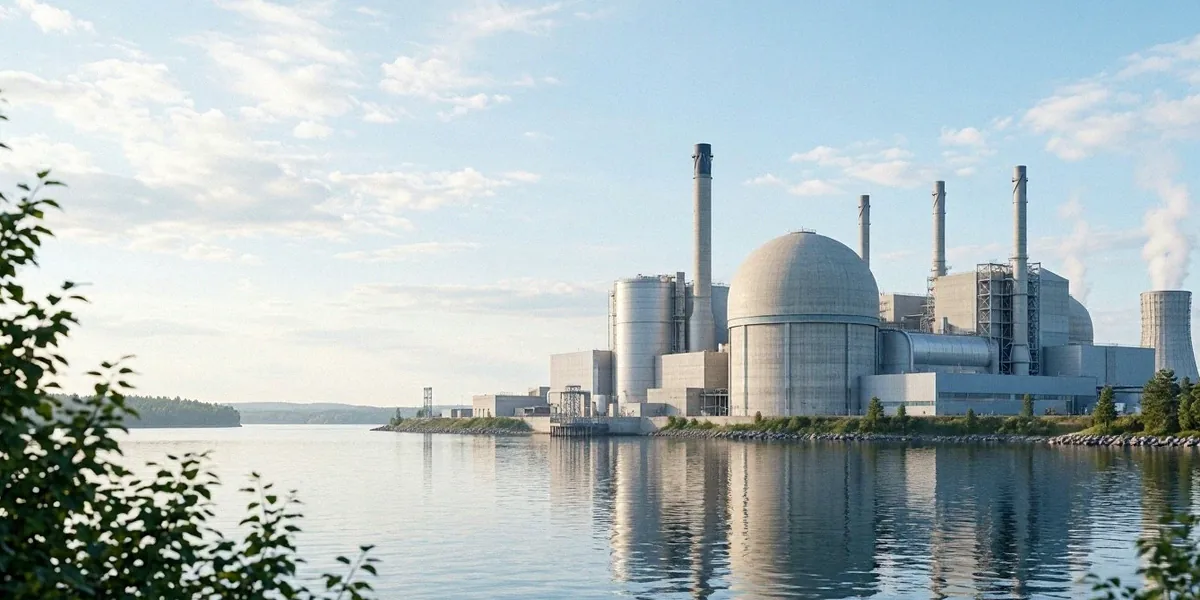
CANDU Reactors in Brief: The Canadian Nuclear Workhorse
If you’ve ever driven a well-worn pickup truck through a Canadian winter, you already understand the CANDU reactor. It isn’t the flashiest machine on the road, and it doesn’t ask for premium fuel. It just starts, runs, and keeps running through conditions that would sideline fancier designs. Here at Cogema.ca, we spend a lot of time thinking about uranium mining and nuclear energy in Canada, and you can’t tell that story without the CANDU reactor at the centre of it. It’s the technology that turned Saskatchewan uranium into Ontario electricity, and it’s still the backbone of our nuclear fleet today.
What Exactly Is a CANDU Reactor?
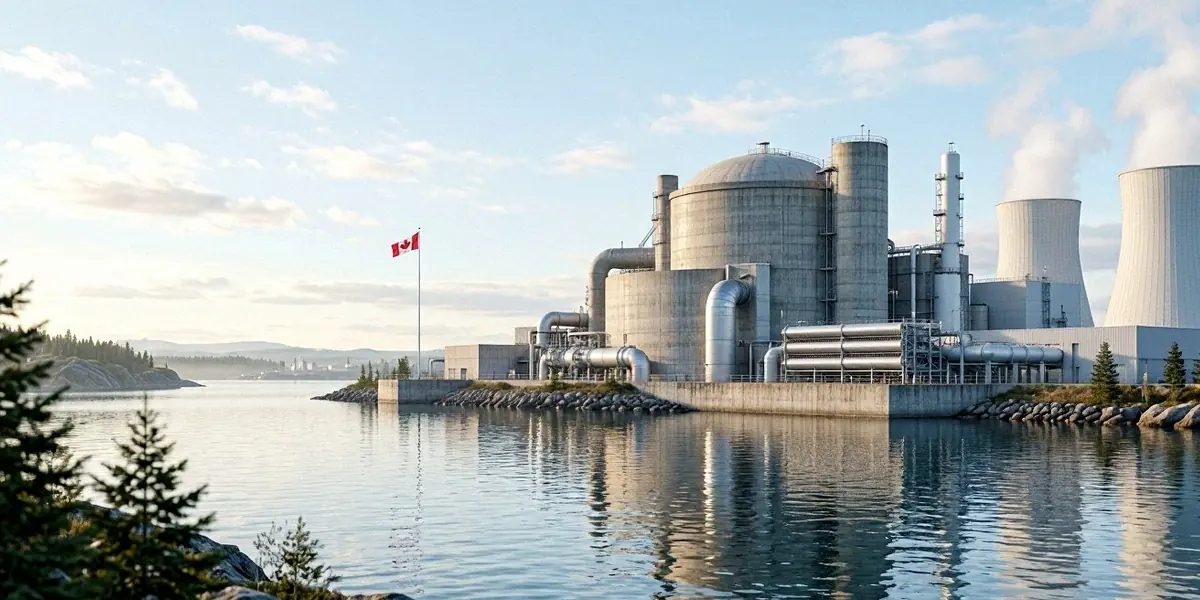
CANDU stands for CANada Deuterium Uranium, and the name tells you almost everything you need to know. It’s a pressurized heavy water reactor developed by Atomic Energy of Canada Limited (AECL), and it uses heavy water as both moderator and coolant, with natural uranium as fuel. That combination is unusual in the global reactor world, where most designs require enriched uranium and light water. The CANDU design also allows refuelling while the reactor is running, which is a big deal for keeping the grid supplied without long shutdowns.
Heavy Water: The Secret Sauce
Heavy water is water where the hydrogen atoms are replaced with deuterium, a heavier hydrogen isotope. Deuterium is exceptionally good at slowing neutrons down without absorbing them, which means a CANDU reactor can sustain a chain reaction using natural uranium instead of enriched fuel. That single design choice ripples through the entire Canadian nuclear story, from the mines in northern Saskatchewan to the reactor halls in Ontario.
Natural Uranium Fuel: No Enrichment Needed
Because heavy water does the heavy lifting on neutron moderation, CANDU fuel doesn’t need to be enriched. The fuel bundles are made of natural uranium dioxide, pressed and sintered into ceramic pellets and assembled into bundles roughly the size of a fire log. This is where Canadian uranium mining and Canadian reactor design lock together: the ore we pull out of the ground in Saskatchewan can go into a CANDU bundle with far less processing than most other reactor types require.
On-Power Refuelling: Keeping the Lights On
CANDU reactors are refuelled while they’re operating. Rather than shutting down every 18 months to swap out a third of the core, a CANDU is topped up continuously using two fuelling machines that connect to the ends of the horizontal pressure tubes. The result is high availability and a steady, predictable demand for fuel bundles. For a utility, that’s a huge operational advantage; for the uranium sector, it means consistent, long-term fuel demand.
A Made-in-Canada Success Story
The CANDU story starts in the 1950s and 1960s at Chalk River Laboratories in Ontario, where Canadian scientists and engineers were already pushing the boundaries of reactor physics. Canada chose this path partly for energy independence and partly because we had something most countries didn’t: vast uranium resources and a small population that needed reliable, affordable power.
Chalk River and the NRX/NRU Reactors
The NRX and NRU reactors at Chalk River were the proving grounds. They demonstrated heavy water moderation and natural uranium fuel at a practical scale, and they trained the engineers who would go on to design commercial CANDU units. Chalk River is also where Canada built its reputation for nuclear research and isotope production, and it remains a foundational site for our industry.
Douglas Point: The First Full-Scale CANDU
Douglas Point on the shore of Lake Huron was the first full-scale CANDU power reactor, coming online in the late 1960s. It was a learning machine as much as a power plant, and the lessons learned there fed directly into the designs that followed. If you want to trace the lineage of every CANDU operating today, Douglas Point is where the family tree really takes root.
Pickering and Darlington: Scaling Up in Ontario
Ontario then scaled the design up in a serious way. Pickering came first, followed by Darlington, and later Bruce. These stations turned CANDU from an engineering experiment into an industrial workhorse. Today, Ontario’s Pickering, Darlington, and Bruce nuclear stations collectively host most of Canada’s CANDU reactors, and they supply a large share of the province’s low-carbon electricity.
Why CANDU Matters for Uranium Mining and Saskatchewan
Here’s where our part of the story comes in. CANDU’s natural uranium fuel cycle is directly tied to Canada’s uranium mining industry, and that industry is concentrated in Saskatchewan. When people ask us why we focus so much on the Athabasca Basin, this is the answer: it’s the fuel source that keeps CANDU reactors running, and it’s one of the most important uranium districts on the planet.
Athabasca Basin: Fueling CANDU and the World
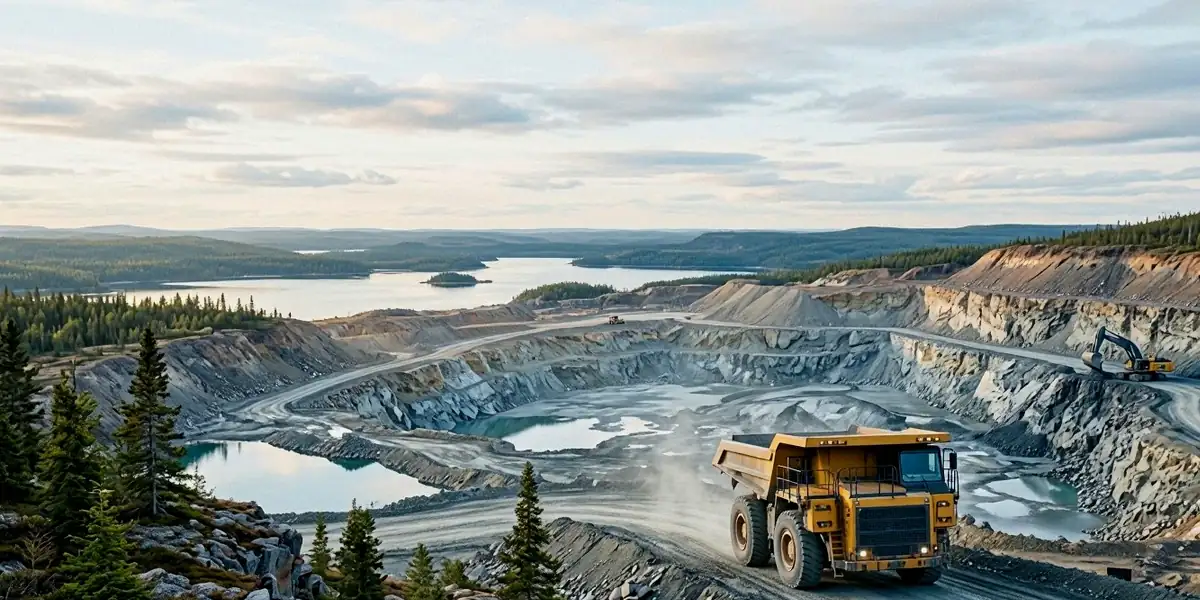
The Athabasca Basin in northern Saskatchewan supplies about 20% of the world’s uranium, much of it for CANDU and other reactors. The grades are the highest in the world, often many times richer than typical global deposits, which is why companies keep exploring there despite the remote location and harsh conditions. Mines like Cigar Lake and McArthur River have become reference points for the entire global uranium sector.
Northern Communities and Mining Jobs
Uranium mining in northern Saskatchewan isn’t just an export story. It’s a major employer for northern communities, including many Indigenous workers and businesses, and it supports training, infrastructure, and long-term careers in some of the most remote parts of the province. When we talk about nuclear energy in Canada, we think it’s important to keep that human dimension in view. The fuel that powers a reactor in Ontario or New Brunswick often starts with a crew working a shift in the north.
Fuel Flexibility: Beyond Natural Uranium
CANDU reactors can also use recycled uranium and thorium, which adds real flexibility to the fuel cycle. Recycled uranium from reprocessing, mixed oxide fuels, and thorium-based cycles have all been studied or demonstrated in CANDU designs. That flexibility matters as the global nuclear industry looks for ways to stretch fuel resources and reduce waste.
CANDU Reactors in Canada and Around the World
Canada didn’t keep CANDU to itself. The design has been exported and adapted in several countries, and it remains one of the most recognizable Canadian technology exports of the past sixty years.
Ontario’s CANDU Fleet: The Backbone of Clean Power
Ontario is the heart of the CANDU fleet. Pickering, Darlington, and Bruce together form the largest concentration of CANDU reactors anywhere, and they’ve been the backbone of Ontario’s clean power supply for decades. Bruce Power in particular is one of the largest nuclear stations in the world by output.
Point Lepreau: Atlantic Canada’s CANDU
Point Lepreau in New Brunswick is Atlantic Canada’s only CANDU reactor, and it’s been generating power since the early 1980s. It’s a smaller fleet than Ontario’s, but it plays an outsized role in the region’s electricity mix and in keeping nuclear expertise alive on the East Coast.
Global Exports and Adaptations
CANDU technology has travelled widely. International deployments and adaptations include:
- South Korea, where CANDU units were built at Wolsong
- Romania, at the Cernavoda station on the Danube
- Argentina, at the Embalse plant
- China, at Qinshan Phase III
- India, where pressurized heavy water reactors (PHWRs) are derived from CANDU technology
- Pakistan, at the Kanupp station
India’s PHWR program in particular is a direct descendant of CANDU, and it has grown into one of the largest heavy water reactor fleets in the world. That’s a remarkable legacy for a design that started at Chalk River.
The Future of CANDU and Nuclear Energy in Canada
CANDU isn’t a museum piece. The fleet is being refurbished, new reactor designs are on the horizon, and the fuel cycle itself is evolving. We think the next decade is going to be one of the most interesting periods in Canadian nuclear history.
Refurbishment: Extending CANDU Lifetimes
Major refurbishment projects at Darlington, Bruce, and Pickering are extending the operating lives of CANDU units by decades. Refurbishment involves replacing key components like pressure tubes and steam generators, and it’s a huge undertaking that employs thousands of skilled workers. It also means the existing CANDU fleet will keep consuming Canadian uranium for a long time to come.
SMRs: The Next Generation
Small modular reactors (SMRs) are the newest chapter. The GE Hitachi BWRX-300 is planned for Darlington, and several other SMR designs are being evaluated across the country. SMRs won’t replace CANDU overnight, but they could complement it, especially in remote northern communities and industrial settings where a full-scale CANDU wouldn’t fit.
Advanced Fuel Cycles and Thorium
Looking further ahead, advanced fuel cycles could let CANDU-style reactors run on thorium, recycled uranium, and other alternative fuels. Canada has research expertise in this area, and the flexibility of heavy water reactors makes them a natural testbed for new fuel concepts. If those cycles mature, they could open up new opportunities for Canadian mining and fuel fabrication.
CANDU reactors are not just historical artifacts. They remain a practical, Canadian-made solution for reliable low-carbon power, deeply tied to our uranium resources and to the northern communities that produce the fuel. From the Athabasca Basin to Darlington, the chain from ore to electricity is one of the most distinctly Canadian stories in energy.
FAQ
What does CANDU stand for?
CANDU stands for CANada Deuterium Uranium. It’s a pressurized heavy water reactor design developed by Atomic Energy of Canada Limited (AECL), using heavy water as both moderator and coolant and natural uranium as fuel.
Why do CANDU reactors use natural uranium instead of enriched uranium?
Heavy water is an excellent moderator that doesn’t absorb many neutrons, so a CANDU can sustain a chain reaction with natural uranium. That avoids the cost and complexity of enrichment and ties the design directly to Canada’s uranium mining industry.
Where does the uranium for CANDU reactors come from?
A large share comes from the Athabasca Basin in northern Saskatchewan, which supplies about 20% of the world’s uranium. The high-grade deposits there are among the richest on Earth and support mining operations that employ many northern and Indigenous workers.
Which provinces have CANDU reactors?
Ontario and New Brunswick. Ontario’s Pickering, Darlington, and Bruce nuclear stations host most of Canada’s CANDU reactors, while Point Lepreau in New Brunswick is Atlantic Canada’s only CANDU reactor.
Are CANDU reactors being replaced by small modular reactors?
Not replaced, exactly. SMRs like the GE Hitachi BWRX-300 planned for Darlington are expected to complement the existing CANDU fleet, especially in remote and industrial applications, while refurbishments extend CANDU operating lives for decades.

Post Comment